

(Washington) The budgetary paralysis in the United States entered its third day on Monday with ambient uncertainty in Congress over the outcome of this “shutdown”, despite the optimism displayed by majority officials.
Published at
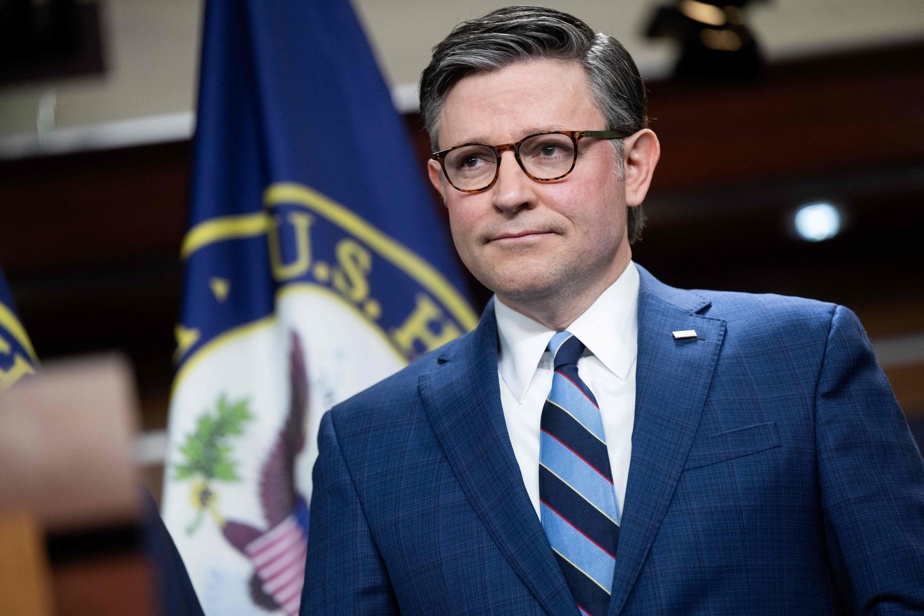
“We will manage to finish all of this by Tuesday, I am convinced,” the Republican President of the House of Representatives, Mike Johnson, preached on Fox News on Sunday.
The “speaker” went so far as to evoke a “formality” to describe the vote expected Tuesday in the hemicycle to lift the “shutdown”.
But with the arrival on Monday in Congress of a new Democratic representative after a partial legislative election in Texas, the “speaker” knows that he cannot afford to lose more than one vote in his camp.
However, several elected officials from the ultraconservative fringe have threatened to oppose the text, because they categorically refuse to renegotiate the budget of the Department of Homeland Security (DHS).
“Democrats are playing political games,” Rep. Chip Roy of Texas said on Fox News on Saturday, accusing the opposition of holding DHS “hostage.”
Reforms
The question of funding this important department is at the heart of the current blockage in Congress since the recent events in Minneapolis.
Democrats are indignant at the death at the end of January of Alex Pretti, a 37-year-old American nurse who was shot and killed by federal agents on the sidelines of demonstrations against the presence of the immigration police (ICE) in this metropolis in the north of the United States.
Her death came less than three weeks after that of Renee Good, also shot and killed by federal agents in Minneapolis.
Democrats have since insisted on refusing to vote on any budget for the DHS – the supervisory department of ICE – without significant reforms being put in place in the way its agents operate.
In particular, they demand the systematic wearing of body-worn cameras, a ban on the wearing of balaclavas, and even that a judicial warrant precede any arrest of a migrant.
Hakeem Jeffries, Democratic minority leader in the House, said Sunday on ABC News that the Trump administration cannot “just talk” and must implement these measures today.
“Need for good faith”
Faced with threats from certain elected officials in his camp, Mike Johnson could need votes from the opposition.
“We need good faith on both sides,” he urged on Sunday.
If the “shutdown” is already in its third day, the United States will probably not experience a repeat of the blockage of last October and November, when Republicans and Democrats fought for 43 days over the question of health insurance subsidies.
Hundreds of thousands of civil servants were then placed on technical unemployment, while others, with missions considered essential, had to continue working. But everyone had to wait until the end of the budgetary paralysis to receive their salary.
The last “shutdown” only ended with the decision of a few Democratic senators to vote for a budget text concocted by the Republicans, in exchange for promises of concessions on these subsidies.
Their decision was strongly criticized by many Democratic supporters, who wanted to see a more vigorous opposition to Donald Trump.



