

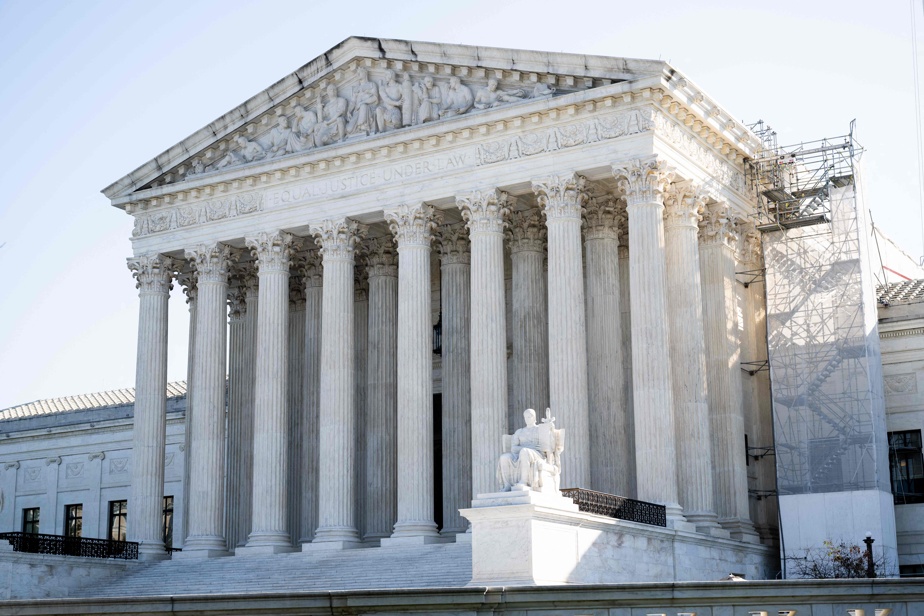
(New York) Some expected as early as the end of 2025 or the beginning of January a decision from the Supreme Court of the United States on the legality of the customs duties imposed by the Trump administration on products from abroad. But we’re still waiting…
Published at
Those who are impatiently awaiting this judgment have now put a reminder of February 20 in their diaries.
What will happen on this date? According to the Supreme Court’s official calendar, this is the next day it could announce a decision.
This time, no one dares to predict anything.
Many will still be on the edge of their chairs Friday morning, starting at 10 a.m., hoping to finally get an answer on the legality of Donald Trump’s so-called “reciprocal” customs duties.
Will this Friday be the good one? A journalist’s quip, repeated in 2012 by the late Justice Ruth Bader Ginsburg, seems to apply to the current situation: “In the Supreme Court, those who know don’t speak and those who speak don’t know.” »
An accelerated procedure
So what is the highest court in the United States waiting for to announce its decision on the customs duties introduced by Donald Trump without the agreement of Congress?
The question betrays an impatience for which the nine judges of the highest court are partly responsible. They considerably accelerated the procedure by agreeing to take up the case last September and to hear the oral arguments from November 5.
In doing so, they signaled their intention to resolve “the problem quickly, perhaps by the end of the year,” the news site Politico even wrote.
That was certainly the desire expressed by the Trump administration, arguing that legal challenges created uncertainty as it sought to use tariffs to resolve various foreign policy issues.
“The issue is crucial,” wrote the Solicitor General of the United States, John Sauer, urging the Supreme Court to act quickly. “The President and his Cabinet have concluded that tariffs promote peace and unprecedented economic prosperity, and that refusing to allow them to be implemented would expose our country to trade retaliation and push America back to the brink of economic collapse. »
Businesses and importers also hoped for a quick decision… against the Trump administration. They are eager to be relieved of the president’s surcharges, but also to be able to claim reimbursements for those they have already paid to the American tax authorities.
A decision in June?
After the oral arguments, several Supreme Court observers were more convinced than ever that the case would not drag on. After all, most of the judges had been skeptical of John Sauer’s arguments. Some of them reminded that the power to impose tariffs rests with Congress and not with the president.
Others have questioned the president’s ability to use IEEPA (International Emergency Economic Powers Act) to impose tariffs without Congressional approval. This law adopted in 1977 does not even mention customs duties as an instrument for regulating imports in the event of an economic emergency.
Isn’t all this clear and easy to explain in a decision?
The judgment was not delivered on January 9, nor on the other three days the Supreme Court announced decisions since the start of the year.
And nothing says that the Court will not wait until the end of the current session, at the end of June, to deliver its verdict on customs duties, as it often does for the most important cases.
Exchanges of varying duration
“So far, (the justices) have not given the impression of considering this dispute an emergency, unlike many people outside the court,” wrote Amy Howe, co-founder of the site SCOTUSblog, which covers Supreme Court news, in an article trying to explain this paradox.
According to the expert, the court judges have already delivered their verdict on the case. But the process of drafting the majority opinion and that of the dissenters may require an exchange of drafts and comments between the different factions, of varying duration.
Justices may also choose to write their own concurring or dissenting opinions, which can prolong the process.
Ultimately, the Supreme Court could strike down the president’s tariffs, while leaving lower courts responsible for deciding refunds. If so, there’s really nothing urgent about his decision.
That said, those interested would still be well advised to prepare for a decision this Friday. You never know with the Supreme Court…
Question
“Mr Trump is increasing the number of legal actions, particularly against the media, demanding huge sums. Who pays the legal costs associated with these proceedings? », asks Louis Jolicoeur.
Answer: When Donald Trump sues a company or an individual, he is the one who pays his legal fees, like any litigant.



