

(New York) Multi-billionaire Elon Musk offered on Saturday to pay the salaries of agents responsible for security checks at American airports who, considered essential personnel, have been working without pay due to a partial budgetary paralysis since mid-February.
Published at
“I would like to offer to pay the salaries of (Transportation Security Agency) TSA employees during the budget impasse that is negatively affecting the lives of so many Americans at airports across the country,” PUBLISHED Elon Musk, on the X network which he owns.
Since February 14, funding for the DHS – the department responsible in particular for security checks at airports – has been frozen due to the deep dispute between Democrats and Republicans in Congress over the practices of the immigration police (ICE).
Due to this shutdown partial, thousands of federal DHS civil servants have been placed on technical unemployment, while thousands of others, in functions considered essential, continue to work.
In both cases, salaries will not be paid until lawmakers agree on a budget for DHS, on which ICE depends.
Affected TSA officials – around 50,000 people – have not been paid in full since March 13.
According to various estimates, the average annual salary of these agents is $50,000 to $60,000, or between $2.5 and $3 billion budget for an entire year.
As a result of this situation, absenteeism increased in their ranks – some to work elsewhere while waiting for parliamentarians to reach an agreement – while others resigned.
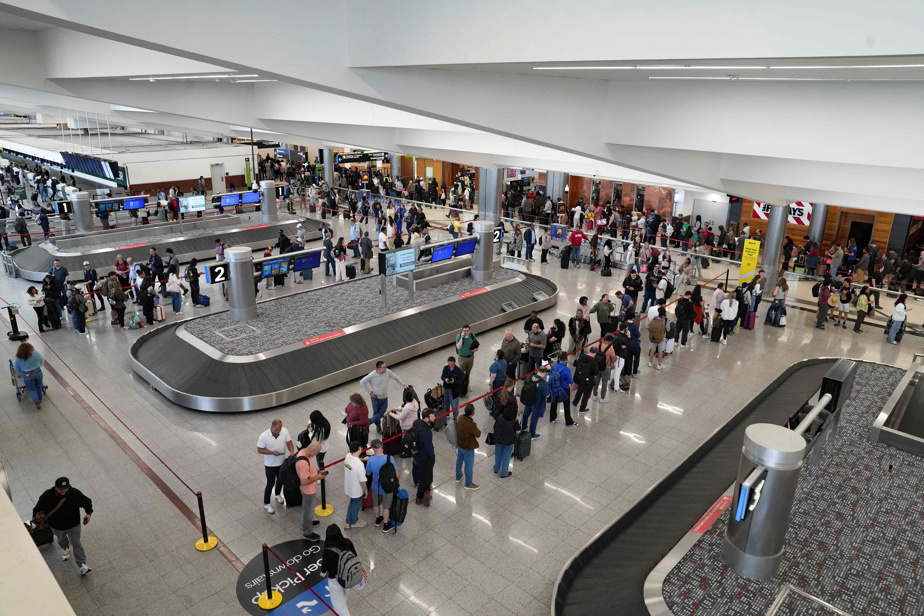
As a result, queues at security checks have lengthened and it is not uncommon to now have to wait several hours in American airports to go through this step and reach the boarding lounge.
Elon Musk is the richest person on the planet, with a fortune estimated by the magazine’s latest annual ranking Forbes – published on March 10 – to 839 billion dollars, against 342 billion a year earlier.
“My “net worth” is almost entirely due to shares held in Tesla and SpaceX,” Elon Musk published in mid-February on X, claiming to have “less than 0.1% of that in cash.”



