

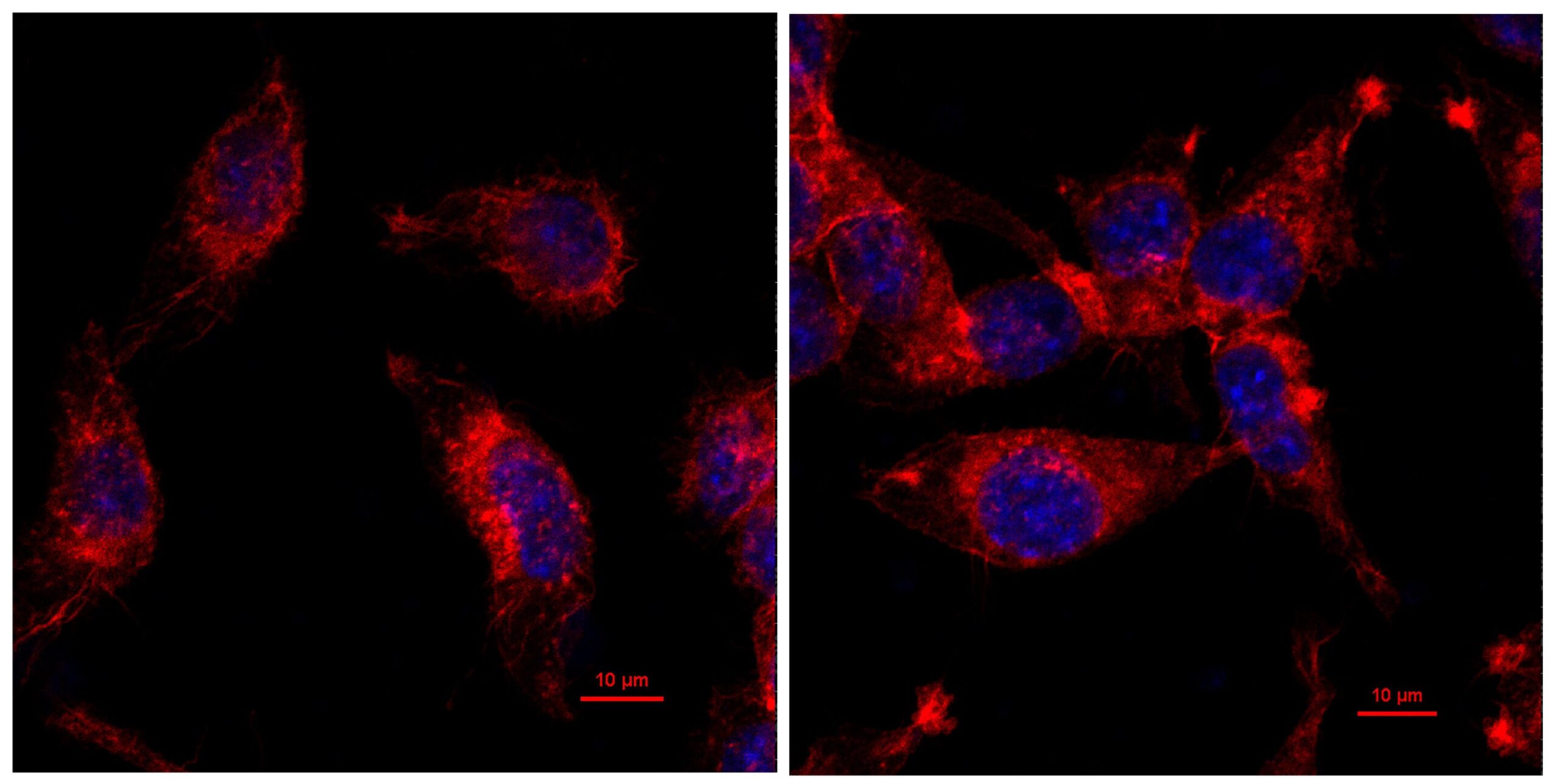
These confocal microscope images illustrate the differences in cell proliferation between a normal murine colon cancer tumor (left) and a tumor carrying the A159V mutation that causes faster tumor growth. New research from experts at Cincinnati Children’s reveals that the drug rapamycin may make mutated tumors more sensitive to immune checkpoint inhibitors. Credit: Children of Cincinnati
Immune checkpoint inhibitors (ICIs) emerged in the United States about 15 years ago as an exciting class of cancer treatments that have achieved complete and durable remissions for thousands of people with end-stage metastatic cancers. However, many other patients have tumors that remain “cold” and do not respond to these treatments.
Now, scientists at Cincinnati Children’s have discovered a specific genetic mutation hidden behind this lack of response and are revealing in mouse models that the well-known drug rapamycin makes these “cold” tumors responsive again.
The research, published in Scientific advanceswas led by first author Mingjun Cai, a graduate student in the Division of Developmental Biology; corresponding author Yi Zheng, Ph.D.; and a team of scientists from the Division of Experimental Hematology and Cancer Biology.
“If further research confirms this effect in humans, these results could facilitate the stratification of patients with this genetic mutation who might benefit from a combination form of treatment,” Zheng said. “We look forward to continuing this work.”
The research team discovered that a specific mutation in the RAC1 gene (labeled A159V) leads to faster growth of several types of cancer tumors, including colon, lung, head and neck cancers, and melanoma. This mutation creates an immunosuppressive tumor microenvironment (called TIME) that blocks the effectiveness of ICIs.
The team demonstrated that mutated tumors exhibit reduced infiltration of immune cells and impaired communication between the tumor and immune cells. Notably, the mutation activates mTORC1 signaling, which increases the tumor’s glucose consumption while depriving immune cells of the energy they need to fight tumors. The mutation also suppresses chemokine production and downregulates IFNGR1 expression, further protecting tumors from immune attack.
The important news from this study is that researchers already know that an FDA-approved drug, rapamycin, inhibits mTORC1 signaling. Indeed, when rapamycin was administered in addition to an ICI, mutant tumors in most cases became as sensitive to treatments as non-mutant tumors.
A potential boost for a class of cancer treatments
The concept behind ICIs stems from the ability of cancerous tumor cells to evade attacks by the body’s natural defenses. To do this, tumors use immune “checkpoints” to turn off immune system responses. If successful, reversing this process leaves tumors vulnerable.
The first immune checkpoint inhibitor approved for use in the United States was ipilimumab (brand name Yervoy) in 2011. This CTLA-4 blocker was initially approved for the treatment of metastatic melanoma. Since then, several other checkpoint inhibitors have been approved for various types of cancer.
The researchers say the A159V gene mutation they found likely only occurs in a small portion of people with “cold” immune tumors; we don’t yet know how many.
“Importantly, although this cancer mutation may be underestimated, we found that rapamycin can reverse these resistant effects at low doses,” says Zheng. “This approach could allow clinicians to more effectively treat patients with A159V-mutated cancers while reducing the risk of side effects.”
Other clinical studies are necessary to validate these results obtained in mice in human cancers. Such trials can take several years. Additionally, rapamycin is an immunosuppressive tool more commonly used to help prevent organ transplant rejection. Zheng predicts that other compounds could be developed to more precisely inhibit RAC1 signaling to enhance the cancer-fighting capabilities of ICIs with fewer overall impacts on the immune system.
More information:
Mingjun Cai et al, Tumor-derived RAC1A159Vthe mutation promotes an immunosuppressive microenvironment that represses the response to the immune checkpoint inhibitor, Scientific advances (2025). DOI: 10.1126/sciadv.aea1212
Provided by Cincinnati Children’s Hospital Medical Center
Quote: Mutation provides interesting new clues for the treatment of “cold” immune tumors (October 29, 2025) retrieved October 29, 2025 from
This document is subject to copyright. Except for fair use for private study or research purposes, no part may be reproduced without written permission. The content is provided for informational purposes only.



