

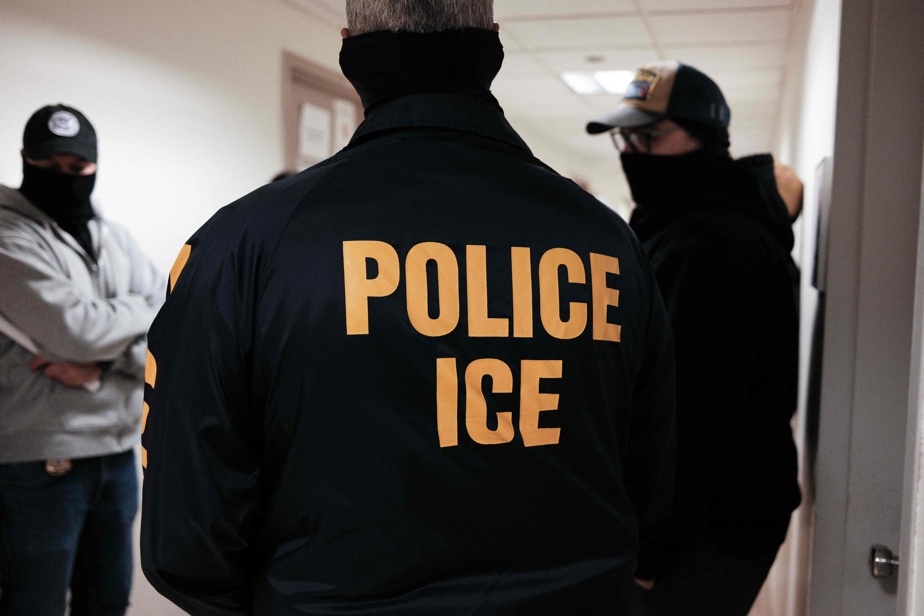
(New York) President Donald Trump’s immigration adviser confirmed Sunday that Immigration Enforcement (ICE) agents would be deployed to U.S. airports on Monday to help specialized agents carry out passenger security checks.
Published at
Donald Trump had threatened on Saturday to send ICE agents to airports on Monday, where waits can last hours due to a lack of Transportation Security Agency (TSA) personnel, who are not paid due to a partial budgetary paralysis.
Questioned on CNN on Sunday morning, his immigration advisor Tom Homan confirmed that a number – undetermined at this stage – of immigration police agents would be deployed on Monday, giving “priority to large airports where the queues are the longest, three hours”.
PHOTO LEILA NAVIDI, ASSOCIATED PRESS ARCHIVES
Tom Homan, immigration advisor
He said details of the deployment were being worked out with ICE and TSA officials.
We’ll be at airports tomorrow, helping TSA move those lines forward.
Tom Homan, immigration advisor
According to Tom Homan, the goal is for police officers to be tasked with simple security tasks, such as guarding exit gates, so that TSA agents can be concentrated at specialized checkpoints.
“I don’t see an ICE agent supervising an X-ray scanner, because they haven’t been trained for that,” he noted.
Since February 14, funding for the Department of Homeland Security (DHS), which oversees the TSA, has been frozen due to the deep dispute between Democrats and Republicans in Congress over immigration police practices, which are highly contested on the left.
As a result of this partial paralysis, thousands of federal DHS civil servants have been placed on furlough, while thousands of others, in functions considered essential, continue to work without being paid.
Transportation Secretary Sean Duffy told ABC on Sunday that the situation is going to get “much worse” as time goes on because more and more TSA agents “are going to quit or not report to their jobs” in order “to take another job to buy food and pay their rent.”
Currently, “there is an average absenteeism rate of 10% at airports”, but up to “30% to 40%” in places, he said.



