


(Washington) The American Congress adopted its defense strategy text for 2026 on Wednesday, with reaffirmed support for the United States’ alliances in Europe, contrary to recent signals from Donald Trump and his government.
Published at
The NDAA, voted on each year by both houses of Congress with a certain consensus between Democrats and Republicans, determines the areas on which the United States should, according to parliamentarians, concentrate as a priority for the following year in terms of defense.
The 2026 version, more than 3,000 pages long, recommends an overall annual budget of more than 900 billion dollars, an increase of five billion compared to the previous year.
The text was adopted in the Senate with 77 votes for and 20 against.
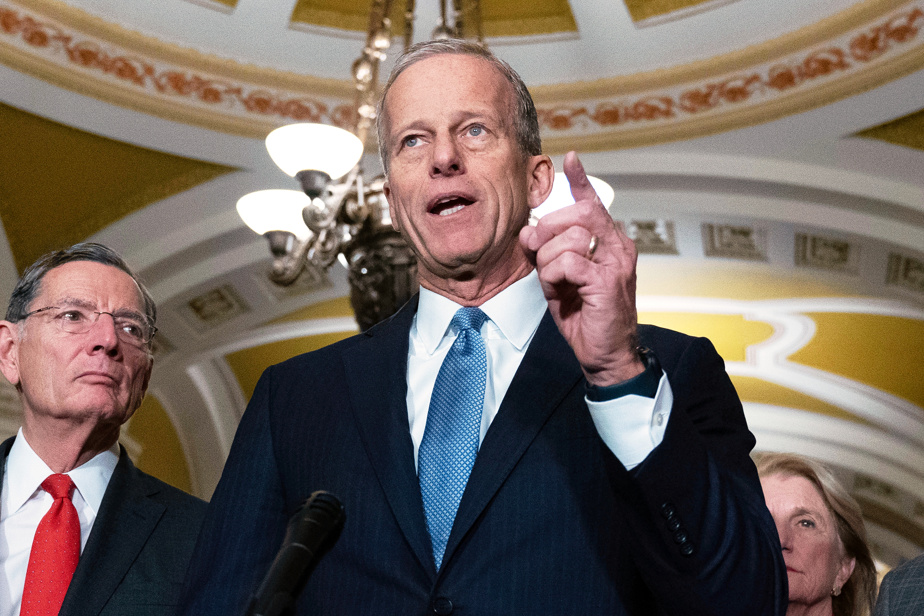
“The surest way to ensure peace is to keep it by force,” assured Tuesday the leader of the Republican majority in the Senate, John Thune, taking up the slogan of “peace through force” adopted by Donald Trump since the start of his second term.
During a speech in the chamber, John Thune highlighted the measures planned by the NDAA this year, in particular the construction of more military ships “to help close the gap” with China’s shipbuilding capabilities, but also the establishment of the anti-missile “Gold Dome” wanted by Donald Trump, or even a 3.8% increase in military pay.
He also highlighted reforms in the Pentagon’s procurement processes with “the elimination of dozens of burdensome rules and laws.”
The Republican tenor, however, made no mention of increased support for European allies.
The NDAA thus anticipates for 2026 some $400 million in purchases by Washington of American military equipment for Kyiv, in order to continue to fight against the Russian invasion.
The Pentagon, under the aegis of Secretary Pete Hegseth, is trying to refocus the United States’ defense strategy on the Americas, with several strikes in the Caribbean Sea and the Pacific Ocean against boats accused of drug trafficking, against a backdrop of increased tensions with Venezuela.
But the bill drawn up by Congress provides for the maintenance of the presence of the United States on European soil. It prevents the Pentagon from reducing the number of American soldiers deployed in Europe below 76,000 without justification to Congress.
A counter to recent statements by Donald Trump, who notably mocked the Europeans’ dependence on the military protection of the United States by saying: “NATO calls me ‘dad'”.
Some Republican parliamentarians, with an isolationist tendency, denounced the text, and in particular the military aid to Ukraine.


