

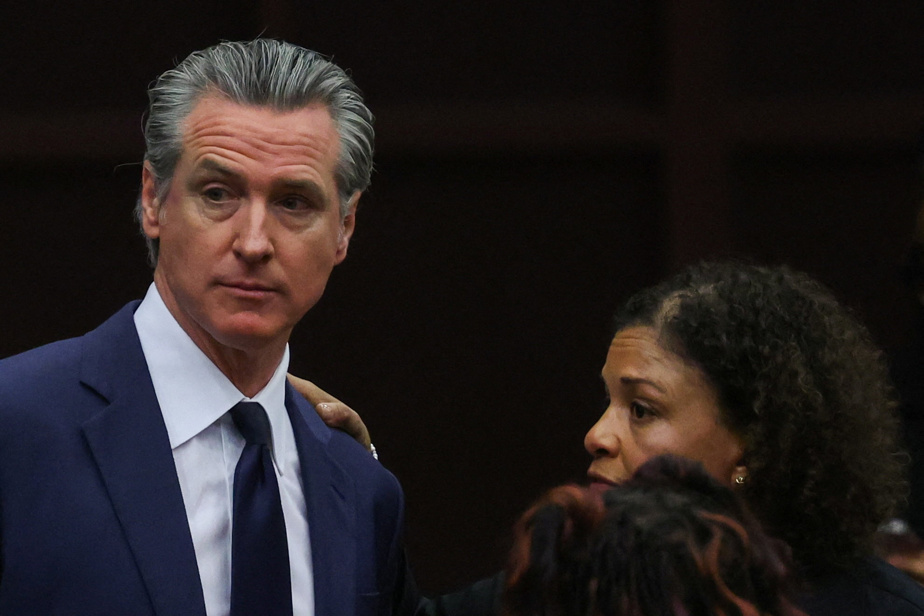
(Sacramento) California Governor Gavin Newsom said there was no imminent threat to the state, despite an FBI warning that Iran could send drones to the US West Coast in retaliation for the ongoing war.
Published at
Mr. Newsom said the issue of drones “has always been a top priority.”
“We were aware of this information. It’s all about preparing for the worst,” the governor explained on Wednesday.
The FBI recently warned law enforcement about Iran and a possible strike in California, but said it was “unverified information.”
“Iran reportedly intends to carry out a surprise drone (UAV) attack from an unidentified vessel off the coast of the United States, specifically targeting unspecified targets in California, in the event the United States launches strikes against Iran, the alert stated. We have no additional information regarding the timing, modus operandi, target or suspected perpetrators of this attack.”
The alert was posted on X by an FBI spokesperson following an ABC News report. Furthermore, White House spokesperson Karoline Leavitt wrote on X that the message addressed to law enforcement was intelligence based on “unverified information.”
“No such threat exists, and has never existed, from Iran against our territory,” Mr.me Leavitt Thursday.
President Donald Trump was asked about it Wednesday at Andrews Air Force Base.
“An investigation is underway, but there is a lot going on at the moment. We can only take things as they come,” Mr. Trump assured.
Special FBI newsletters are quite frequent and can cover everything from potential security issues to agent awareness recommendations regarding fentanyl.
The bulletins were issued when the drug began to proliferate on the streets, said Brian Kohlhepp, a lecturer at John Jay College of Criminal Justice. Depending on international conflicts, these bulletins may be issued monthly, or even several times a month, but urgent information is communicated differently, he said.
“Typically, bulletins are sent out to alert local law enforcement to information that has come to the attention of the FBI and that the FBI considers sufficiently credible to warrant more rapid dissemination,” said Kohlhepp, a former member of the FBI’s Joint Counterterrorism Task Force.
If the information required urgent or immediate action, Kohlhepp said the FBI would be more likely to arrange a conference call with affected partners or establish more direct contact.
Police in Los Angeles and San Francisco said they monitor international news to identify any risks to their cities. They both said they work closely with state and federal authorities.



