

(Sulphur Springs) Since the start of the war in the Middle East, Ron Hubbard’s phone has not stopped ringing. “You want a bomb shelter or a tornado shelter? », asks the Texan entrepreneur. “Anti-bomb”, for 10 people, answers a customer in Florida.
Published at
“We have seen a sharp increase since the start of the war in Iran, mainly in the Gulf countries,” Mr. Hubbard, 63, told AFP. “Ironically, we opened our offices in Dubai on February 26, 48 hours before the start of the war, our timing was ideal, allowing us to meet demand. »
On this Saturday morning in Sulfur Springs, a small town in Texas, Atlas Survival Shelters, Ron Hubbard’s company, has already received calls from Qatar, Pakistan and Dubai. In the latter country, a client wants shelter that would allow him to survive for five years.
And even if Donald Trump assures that the American offensive against Iran will be brief, with the constant bombings, many people want shelter.
“The demand for this type of product is at its highest right now, I’ve never seen that before,” insists Mr. Hubbard.
To meet demand from foreign markets, Atlas grants licenses to local companies and when a contract is concluded, part of its staff goes on site to supervise the work, which helps reduce costs.
“Armageddon or rain of missiles”
PHOTO MARK FELIX, AGENCE FRANCE-PRESSE
Even though Donald Trump assures that the American offensive against Iran will be brief, many people want shelter.
But the demand does not only come from countries under the bombs. It is also increasing in the United States.
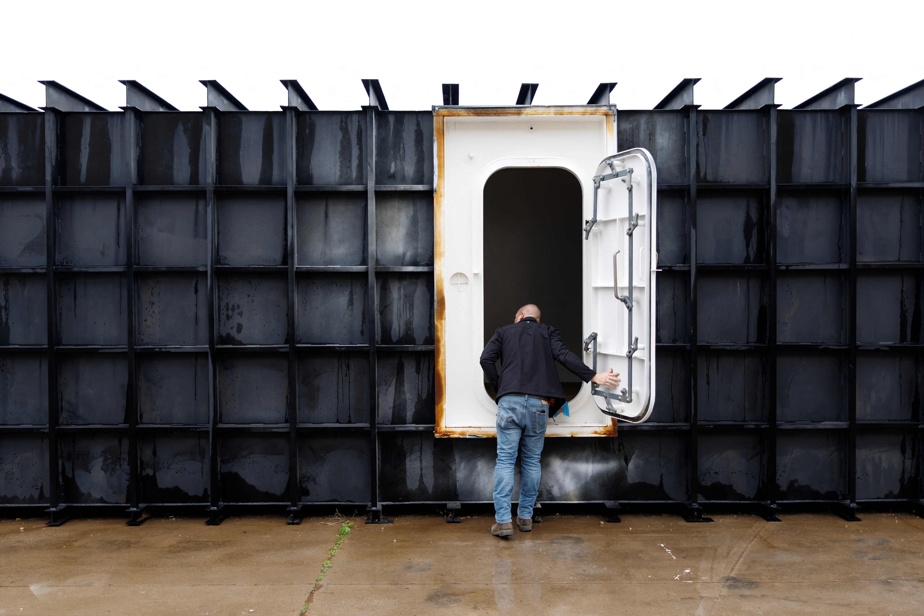
In the factory courtyard, around twenty shelters, similar to steel containers, are ready to be shipped. Forty more orders are in production and Ron Hubbard estimates that in the next two months alone his company could achieve more sales than in the last three years.
Atlas is currently working on a bunker for masculinist influencer Andrew Tate, he built one for YouTube philanthropist MrBeast, another in California for Kim Kardashian, and Meta boss Mark Zuckerberg also commissioned a project from him, assembled by a local entrepreneur. All had placed orders well before the start of the war.
A basic shelter, designed for four people to stay underground in their backyard for up to a week and withstand bombing and radiation, costs about US$25,000.
The most sophisticated, designed to survive for years, can cost several million dollars, depending on the amount of food, energy and water stored.
“It depends on whether you’re preparing for the end of the world or Armageddon, or whether you’re preparing for a hail of missiles like most Israelis did,” says Mr. Hubbard, who says he builds shelters for all scenarios.
Structures can be built from concrete directly in the field, or fabricated from metal in the Texas factory and then delivered to the customer.
Disinfection chamber
“A radioactive fallout shelter only requires a depth of one meter. It’s not the shelter itself that protects you from radiation, but the earth and concrete that covers it,” he explains.
“But I like to go as deep as possible and I go two or three meters underground, in case there is artillery fire. »
The shelters have a sealed main door and a disinfection chamber where people can shower if they have been exposed to a contaminated environment.
Depending on the budget, the interior can be similar to that of an apartment: living room with television, bedroom, kitchen, laundry room, bathroom, etc. Some shelters also include a room for storing weapons.
The idea is that it is connected to a power source, has battery backup, stores and filters water, and has a wireless connection. In the event of a power outage, the bunker ventilation system can be operated manually using a crank.
“No one thinks that someone is crazy for needing a bomb shelter anymore, especially with the uncertain future that lies ahead,” said Ron Hubbard.



