

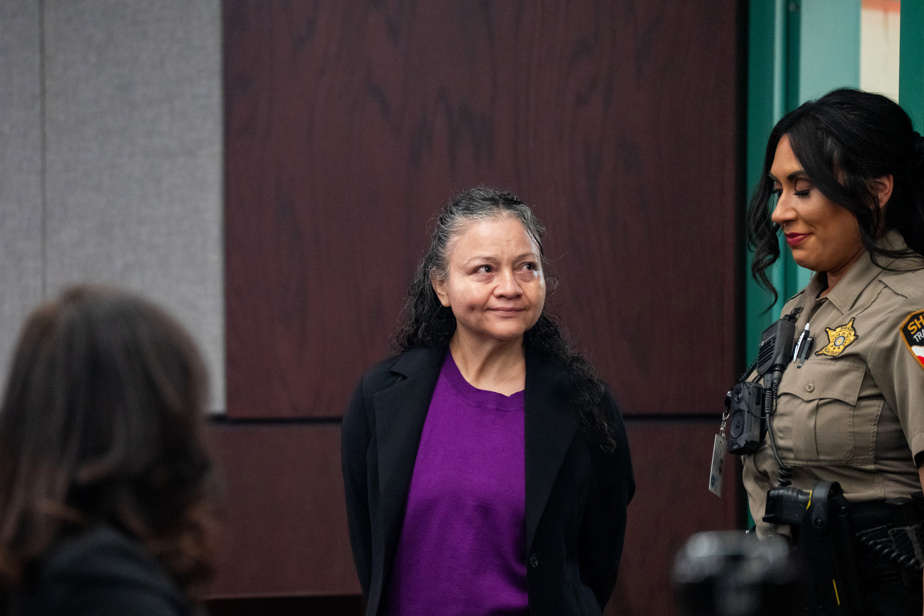
(Houston) A woman who spent 22 years in a Texas prison accused of killing a baby was released Wednesday after a court determined she was convicted based on faulty testimony and incomplete evidence.
Published at
“I was strong, I thought I was going to die there. I was strong, I believed in God,” Carmen Mejia, originally from Honduras, told the press as soon as she left the penitentiary where she was detained.
She was under a deportation order following her conviction, but US authorities lifted the restrictions after the new verdict, according to her defense.
Carmen Mejia, 52, said she was grateful to God and her lawyers, who accomplished what she called a “huge miracle.”
“Although we are very happy that the court recognized the innocence of Mme Mejia, this grave injustice should never have happened,” said Vanessa Potkin, an attorney for the Innocence Project, which handled the case.
Carmen Mejia was sentenced to life in prison for allegedly dipping a 10-month-old child in her care into boiling water. The baby died in hospital from his burns in 2003.
PHOTO MIKALA COMPTON, ASSOCIATED PRESS
Carmen Mejia hugs one of her daughters.
She was convicted based on testimony from a doctor and an expert, who said the burns were caused intentionally by an adult.
She then lost custody of her four children, who were given up for adoption.
But Carmen Mejia’s lawyers proved that it was a domestic accident caused by the water heater having raised the water temperature to more than 60°C in a few seconds, while the baby was taking a bath.
In 2025, Elizabeth Peacock, the doctor who performed the autopsy at the time, ruled out the cause of death as accidental, and stated that she would have ruled it an accident if she had had all the information available.
In a report released in January 2026, the Texas Court of Appeals found Carmen Mejia “innocent.” And this week, Travis County Judge David Wahlberg dropped the charges and ordered his release.
Collin Bellair, Travis County’s deputy district attorney, acknowledged during the hearing that a “tragic accident” was “turned into an unjust conviction,” according to details provided by the Innocence Project.
“Nothing I say or anything we do today can give you back the time that was stolen from you or repair the pain and separation you and your children have had to endure,” said Sarah Byrom, also a prosecutor.



