

(Portland, Maine) At the African Super Market, John helps a young man locate items on his list among shelves filled with dried legumes, bottles of oil and bags of rice. The customer with blue eyes and a pale complexion is not used to it: he buys these foods for a family too frightened by the operations of the immigration police to leave their house.
Published at
“People are not coming anymore, I would say the traffic is down by 50%,” says John, manager of the small grocery store in downtown Portland, which mainly caters to customers from East and Central Africa. In the current climate of mistrust, he prefers to keep his last name quiet.
US Immigration and Customs Enforcement (ICE), the federal agency responsible for enforcing immigration laws, has launched a series of highly visible operations since last year. Donald Trump promised mass expulsions of illegal migrants during the election campaign.
On the fronts of many businesses in downtown Portland, such as the African Super Market, black and white posters announce: “Private property – Access strictly prohibited to ICE”.
Confinement
ICE is more limited in its actions, legally, than a police force. Rights groups suggest that migrants not open the door of their residence to its agents if they do not have a warrant signed by a judge. Without the invitation issued by an open door, the agent will not, in theory, be able to enter their home.
PHOTO MARTIN TREMBLAY, THE PRESS
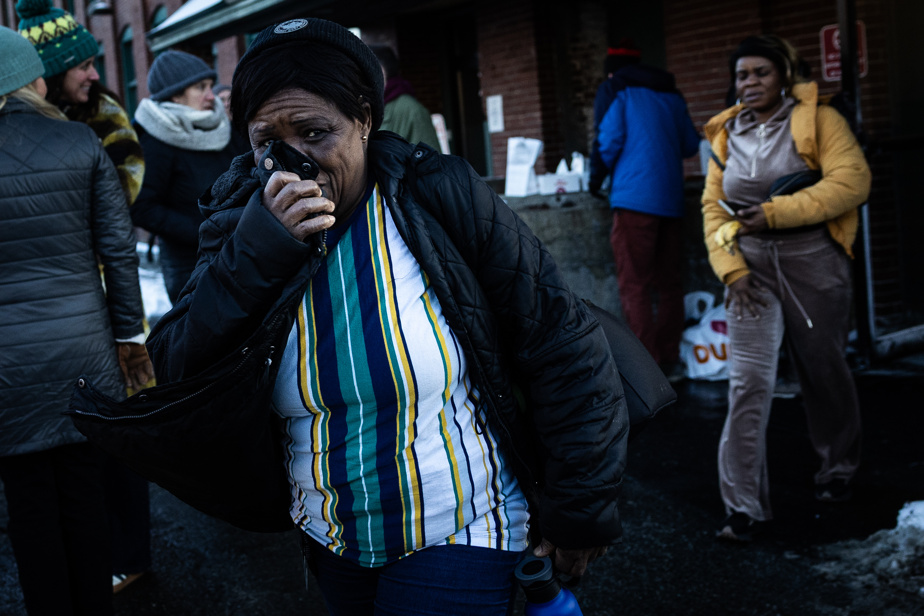
Edith, originally from Madagascar, went shopping with her 2-year-old daughter. “My faith tells me to stay calm,” she said.
But if the person is outside or in a public place, for example, they must comply if stopped by an ICE agent.
“I have a photo of my passport in my phone because they target racialized people,” says John. A lot of people are no longer free, we can’t go out and go to dinner somewhere just like that. »
I go from home to work and from work to home, and that’s it.
John, manager of the African Super Market grocery store in Portland
The 45-year-old, from South Sudan, fears proof may not be enough to avoid arrest. “ICE agents are brutal, aggressive, they don’t speak before they attack,” John emphasizes.
PHOTO MARTIN TREMBLAY, THE PRESS
“Private property – Access strictly prohibited to ICE”, we can read on the front of the African Super Market.
The deaths of two American citizens in Minneapolis, killed by ICE and Border Patrol (CBP) agents, and videos of brutal arrests have stoked fears. Legal migrants were also arrested.
Sanctuaries
Sanctuary states and cities are in the crosshairs of the Trump administration. In these often Democratic states and cities, police officers do not transmit information to federal authorities on the immigration status of the people with whom they are in contact. A way to preserve the trust and collaboration of the population in communities that are often suspicious, they explain.
PHOTO MARTIN TREMBLAY, THE PRESS
The US federal immigration offensive began last week in Maine, part of a series of similar operations carried out in several cities in the United States.
Maine became a sanctuary state on January 11, after a new law came into effect.
Operation “Catch of the Day” was launched less than two weeks later, on January 20. The goal? Arrest 1,400 people, in this state of 1.4 million inhabitants which has approximately 53,000 foreign-born residents.
ICE promised to target “the worst of the worst foreign criminal elements who terrorize communities,” according to its statement.
In all, just over 200 people were arrested by ICE.
“I agree that they should arrest the criminals – I don’t want them here – but that’s not what they did,” laments Alessia Gaspar Da Silva, met in Bridgton, about sixty kilometers from Portland.
Her husband arrested
The 50-year-old American is fighting for the release of her husband, Marcos, arrested at the start of the operation at the wheel of his work truck. The 32-year-old Brazilian entered the United States irregularly in 2020, but was later granted temporary authorization. The couple married in 2023.
PHOTO MARTIN TREMBLAY, THE PRESS
Alessia’s husband Gaspar Da Silva was arrested by federal ICE agents.
I fish and there are rules and criteria to respect: if a fish does not meet these criteria, we throw it back into the water. Marcos is not a violent criminal.
Alessia Gaspar Da Silva
“There is no warrant against (Marcos), continues Mme Gaspar Da Silva. He is not subject to any expulsion order. The process was underway. But we are still learning what forms we need to fill out. »
His lawyer filed a request for his immediate release.
“I’m afraid of losing him,” his wife said, crying. Her husband was threatened in Brazil, she says. “I’m afraid that he will die, afraid of not knowing where he is, afraid for his safety,” she adds, a black satchel full of documents in front of her.
PHOTO MARTIN TREMBLAY, THE PRESS
Alessia Gaspar Da Silva fights for the release of her husband.
The mother launched a crowdfunding campaign to cover legal costs and is opening up publicly about her situation. Not without attracting comments of all kinds.
“There are people who react in a hateful way,” she said.
Divisions and distrust
Although Maine is known as a progressive state, it is also divided. Trump received 45.5% support in 2024.
The ideological divide has exacerbated the climate of distrust.
PHOTO MARTIN TREMBLAY, THE PRESS
Scott Cousineau, senior pastor of First Parish Congregational Church in Saco
“ICE encourages people to report their neighbors,” says Scott Cousineau, senior pastor of the First Parish Congregational Church.
His church is located in Saco, less than seven kilometers from Old Orchard and its beach well known to Quebecers.
PHOTO MARTIN TREMBLAY, THE PRESS
Old Orchard Beach
The reverend was in shock after the arrest of one of his parishioners, Makengo Nzeza. “His papers are in order, he is following the process as it should, he has been here for eight years,” he explains, standing in the nave of the church.
Mr. Nzeza was intercepted while shopping, days after the premature birth of his fourth child.
His wife no longer dares to go out. Even to go see your baby, always in a specialized unit at the hospital. “There are volunteers who carry her breast milk for her,” says the pastor.
But even initiatives to help homebound migrants carry risks, says Scott Cousineau. “A lot of people want to help, but we’re trying to see how we can do it without exposing vulnerable people,” he explains. And it’s sad, but we also have to ask ourselves who we can trust. »



