

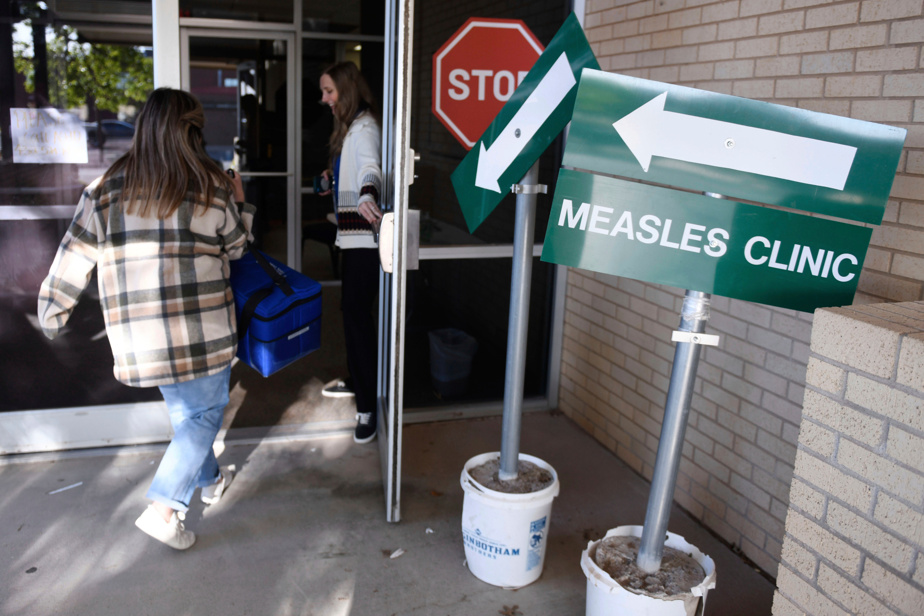
(Washington) The number of measles cases continues to increase in the United States, and particularly in the state of South Carolina (southeast) where more than 600 cases have been recorded since last fall, local authorities reported Tuesday.
Published at
Against a backdrop of growing mistrust of vaccines, this serious and highly contagious disease has made a comeback in several developed countries including the United States, which is experiencing its worst epidemic in more than 30 years.
After more than 2,200 cases recorded and three deaths, including two young children, in 2025, contaminations will continue to soar in 2026.
PHOTO ALEX BRANDON, ASSOCIATED PRESS ARCHIVES
US Secretary of Health Robert Kennedy Jr.
A major health crisis to which Donald Trump’s Health Secretary, vaccine skeptic Robert Kennedy Jr., is accused of largely contributing by fueling fears about the vaccine.
In South Carolina, a state on the east coast, 88 new cases have been reported since Friday, local health authorities said on Tuesday, bringing to 646 the number of contaminations since the detection of an outbreak last fall.
The majority of infected people were unvaccinated, authorities said. Some cases were identified in schools but also on the campuses of two universities.
Contaminations have also been reported in eight other US states since the start of the year, according to the main US health agency, the Centers for Disease Control and Prevention (CDC).
This situation raises fears that the United States will lose the status of “country having eliminated measles”, which it acquired in 2000 after eradicating this disease thanks to vaccination.
The Pan American Health Organization (PAHO) last week summoned the United States and Mexico, which is also facing a resurgence of the disease, to reassess their status in April.
She already withdrew this title in November in Canada, which recorded more than 5,000 cases in 2025.
Measles causes fever, respiratory symptoms and rash, and in some cases more serious complications, such as pneumonia and inflammation of the brain which can cause serious after-effects and death.



