


(New York) Less than 24 hours after crowds of jubilant supporters descended on Manhattan for his historic inauguration, Zohran Mamdani began his first day of work with a routine well known to New Yorkers: the ride to the subway from his small apartment.
Published at
Bundled up to protect himself from the cold and visibly cold, he left his two-room apartment in Queens on Friday morning, which he shares with his wife. But unlike most commuters, Mr. Mamdani’s journey was documented by a photo and video team, and regularly interrupted by neighbors who wished him well.
This 34-year-old democratic socialist, whose victory was hailed as a turning point for the progressive movement, is now tackling the task of leading the country’s largest city: signing decrees, announcing appointments, answering questions from the press and justifying some of his actions taken during his first hours.
Surrounded by bodyguards and a handful of aides on a Manhattan-bound train, he agreed to take several selfies with wide-eyed passengers, then settled into a corner of the train car to review his briefing materials.
When a couple of French tourists, intrigued by the surrounding agitation, approached Mr. Mamdani, he introduced himself as “the new mayor of New York”. They seemed skeptical. He then held up the morning copy of New York Daily Newswhich included her smiling photo, as proof.
Mr. Mamdani, a Democrat, is far from the only mayor in the city to use public transportation to appear accessible. His predecessor, Eric Adams, also took the metro the day he took office, and Bill de Blasio and Michael Bloomberg had gotten into the habit of it, particularly to make an impression.
A few minutes after Mr. Mamdani entered city hall, images of him on public transport ignited social networks.
While the ride also served as a timely photo opportunity, it also seemed to reflect Mr. Mamdani’s pledge in his inauguration speech to make his government “look like the people it represents.”
His other actions carried out from the start of his mandate also appeared to confirm this priority.
After focusing much of his campaign on lowering rents for New Yorkers, Mr. Mamdani rushed from his inauguration ceremony on Thursday to the lobby of a Brooklyn building, where he was warmly greeted by cheers from the tenants’ union. He then promised that the city would intensify the ongoing legal battle against the owner, accused of negligence.
Mr. Mamdani’s next action, meanwhile, highlighted the unusual attention paid to his nascent administration, particularly because of its criticism of Israel and its outspoken support for the Palestinian cause.
In an effort to start fresh, he revoked a series of executive orders issued by Mr. Adams late in his term, including two concerning Israel: one officially adopting a controversial definition of anti-Semitism that included some criticism of Israel, and the other prohibiting municipal agencies and employees from boycotting or divestment from Israel.
The decision sparked a strong reaction from some Jewish groups, including accusations from the Israeli government, posted on social media, that Mr. Mamdani had “fueled the fire.”
Asked by a reporter Friday about the revoked executive orders, Mr. Mamdani read a prepared response, promising that his administration would fight “relentlessly against hatred and division.” He specified that he had maintained the Mayor’s Office for the fight against anti-Semitism.
Mr. Mamdani also announced the creation of a “citizen mobilization” office, which he said would continue the ground work carried out by his campaign team to encourage more New Yorkers to become politically engaged.
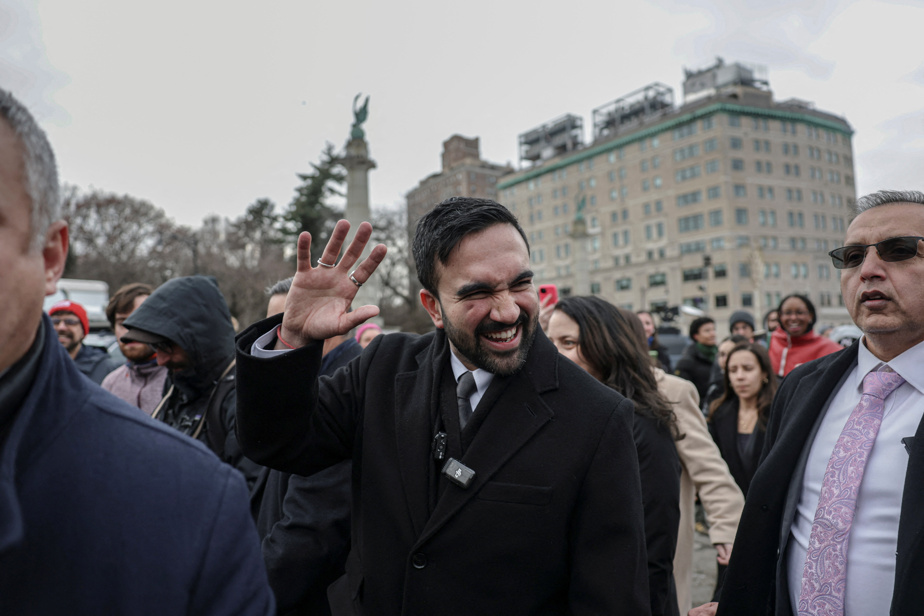
Surrounded by sympathizers and passers-by gathered in several rows, phones in hand, to catch a glimpse of the new mayor, Mr. Mamdani then recognized the importance of the moment.
“We have a unique opportunity here: New Yorkers allow themselves to believe again in the possibility of municipal governance,” he argued. But this hope will not hold without concrete actions. »
Among Mr. Mamdani’s other priorities: moving into the mayor’s official residence, a stately mansion on Manhattan’s Upper East Side, before the lease on his Queens apartment expires at the end of the month.


